
Retained earnings refer to a company’s net earnings after they pay dividends. The word “retained” means that the company didn’t pay the earnings to its shareholders as dividends. Retained earnings represent a company’s total earnings after it accounts for dividends. A company is normally subject to a company tax on the net income of the company in a financial year.
Retained Earnings in Financial Statements

For example, if you prepare a yearly balance sheet, the current year’s opening balance of retained earnings would be the previous year’s closing balance of the retained earnings account. Retained earnings refer to the portion of a company’s profits that are reinvested back into the business, rather than being distributed to shareholders. Over time, retained earnings can have a significant impact on a company’s growth and profitability. The level of retained earnings can guide businesses in making important investment decisions. If retained earnings are low, it may be wiser to hold onto the funds and use them as a financial cushion in case of unforeseen expenses or cash flow issues rather than distributing them as dividends. However, if both the net profit and retained earnings are substantial, it may be time to consider investing in expanding the business with new equipment, facilities, or other growth opportunities.
Where are retained earnings indicated in financial statements?
Retained earnings also play a crucial role in financial ratio analysis, offering insights into a company’s performance and stability. One key ratio influenced by retained earnings is the return on equity (ROE), which measures a company’s profitability relative to shareholders’ equity. A higher retained earnings balance can enhance ROE by increasing the equity base, indicating efficient use of profits to generate returns.
- However, this creates a potential for tax avoidance, because the corporate tax rate is usually lower than the higher marginal rates for some individual taxpayers.
- Retained earnings are a key indicator of a company’s financial health, reflecting its ability to reinvest profits for growth or distribute dividends to shareholders.
- In this article, we’ll delve into the fundamentals of Retained Earnings, explaining what it is, how to calculate it, and why it matters.
- Management knows that shareholders prefer receiving dividends, but they may not distribute dividends to stockholders.
- A key measure in business accounting, retained earnings will help you chart a course for growth.
- However, note that the above calculation is indicative of the value created with respect to the use of retained earnings only, and it does not indicate the overall value created by the company.
- Generally speaking, a company with a negative retained earnings balance would signal weakness because it indicates that the company has experienced losses in one or more previous years.
Pay off debts
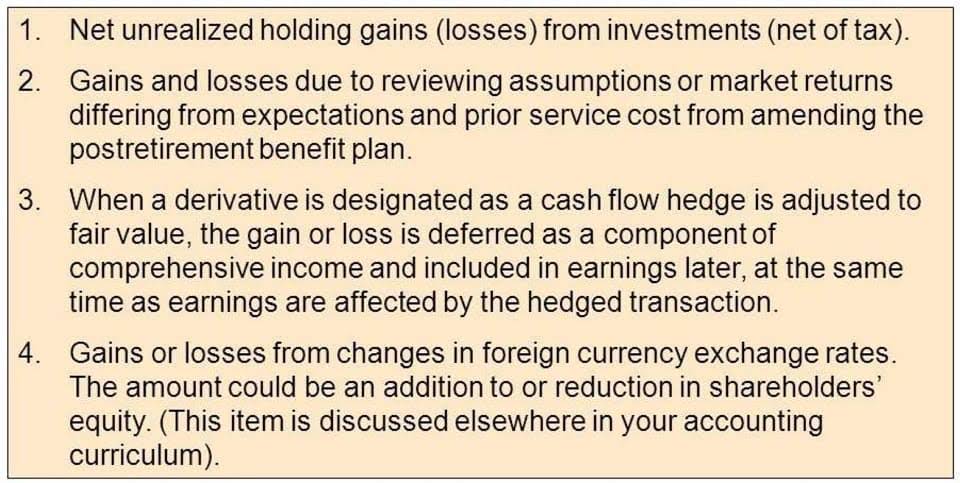
Thus, credits increase the account and debits decrease the account balance. When I was first learning accounting, it took me a little while to understand exactly what the RE account was. It’s just an account where the net income or net loss for each year is stored eternally, so it’s just the total net income or loss the corporation has achieved in its existence. Retained earnings are affected by an increase or decrease in the net income and amount of dividends paid to the stockholders.
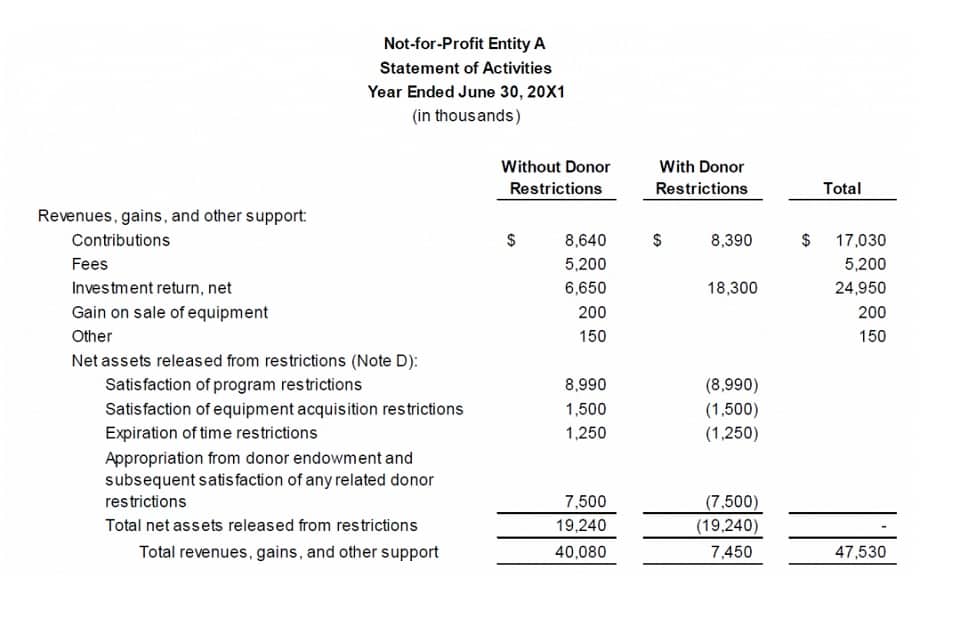
For instance, a manufacturing firm might use retained earnings to modernize retained earnings meaning its production facilities, thereby increasing efficiency and reducing costs. Moreover, the impact of dividends on retained earnings is not just a matter of financial arithmetic; it also affects investor perception and market valuation. A company that consistently pays dividends might be viewed as reliable and financially sound, attracting income-focused investors. On the other hand, a firm that retains most of its earnings might appeal to growth-oriented investors who are more interested in capital appreciation than immediate returns. This dynamic can influence stock prices and overall market sentiment, further underscoring the importance of dividend policies in corporate strategy. When lenders and investors evaluate a business, they often look beyond monthly net profit figures and focus on retained earnings.
- Observing it over a period of time (for example, over five years) only indicates the trend of how much money a company is adding to retained earnings.
- There are plenty of options out there, including QuickBooks, Xero, and FreshBooks.
- The figure is calculated at the end of each accounting period (monthly/quarterly/annually).
- While the intent of the appropriation requirement is to maintain the debtor’s solvency, it does not work nearly as well as the more specific restrictions.
- Retained earnings refer to the money that’s left over after a company uses its net income to pay shareholders.
The issue of bonus shares, even if funded out of retained earnings, will in most jurisdictions not be treated as a dividend distribution and not taxed in the hands of the shareholder. Any item that impacts net income (or net loss) will impact the retained earnings. Such items include sales revenue, cost of goods sold (COGS), depreciation, and necessary operating expenses. It involves paying out a nominal amount of dividends and retaining a good portion of the earnings, which offers a win-win.
- This can be found in the balance of the previous year, under the shareholder’s equity section on the liability side.
- When a company loses money or pays dividends, it also loses its retained earnings.
- Owners of stock at the close of business on the date of record will receive a payment.
- As you can see there is a heavy focus on financial modeling, finance, Excel, business valuation, budgeting/forecasting, PowerPoint presentations, accounting and business strategy.
- They go up whenever your company earns a profit, and down every time you withdraw some of those profits in the form of dividend payouts.
The company’s retained earnings calculation is laid payroll out nicely in its consolidated statements of shareowners’ equity statement. Here we can see the beginning balance of its retained earnings (shown as reinvested earnings), the net income for the period, and the dividends distributed to shareholders in the period. Retained Earnings is a critical financial metric that reveals the cumulative net earnings a company has retained over time, rather than distributed as dividends to shareholders. This amount represents the company’s profits that have been reinvested in the business.
- In the next accounting cycle, the RE ending balance from the previous accounting period will now become the retained earnings beginning balance.
- It’s worth noting that retained earnings are subject to legal and regulatory restrictions.
- To get a better understanding of what retained earnings can tell you, the following options broadly cover all possible uses that a company can make of its surplus money.
- To remove this tax benefit, some jurisdictions impose an “undistributed profits tax” on retained earnings of private companies, usually at the highest individual marginal tax rate.
- If the result is positive, it means the company has added to its retained earnings balance, while a negative result indicates a reduction in retained earnings.
- Retained are part of your total assets, though—so you’ll include them alongside your other liabilities if you use the equation above.
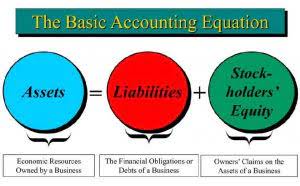
- Shareholder equity represents the owners’ claim after liabilities are settled, with retained earnings as a significant component.
Shareholders and management might not see opportunities in the market that can give them high returns. For that reason, they may decide to make stock or cash dividend payments. Revenue and retained earnings are crucial for evaluating a company’s financial health. Retained earnings are important for the assessment Bookkeeping for Chiropractors of the financial health of a company.